Germany
Berlin election: How Stefan Evers became the CDU's top candidate
By Andre Kartschall
Published September 14, 2026
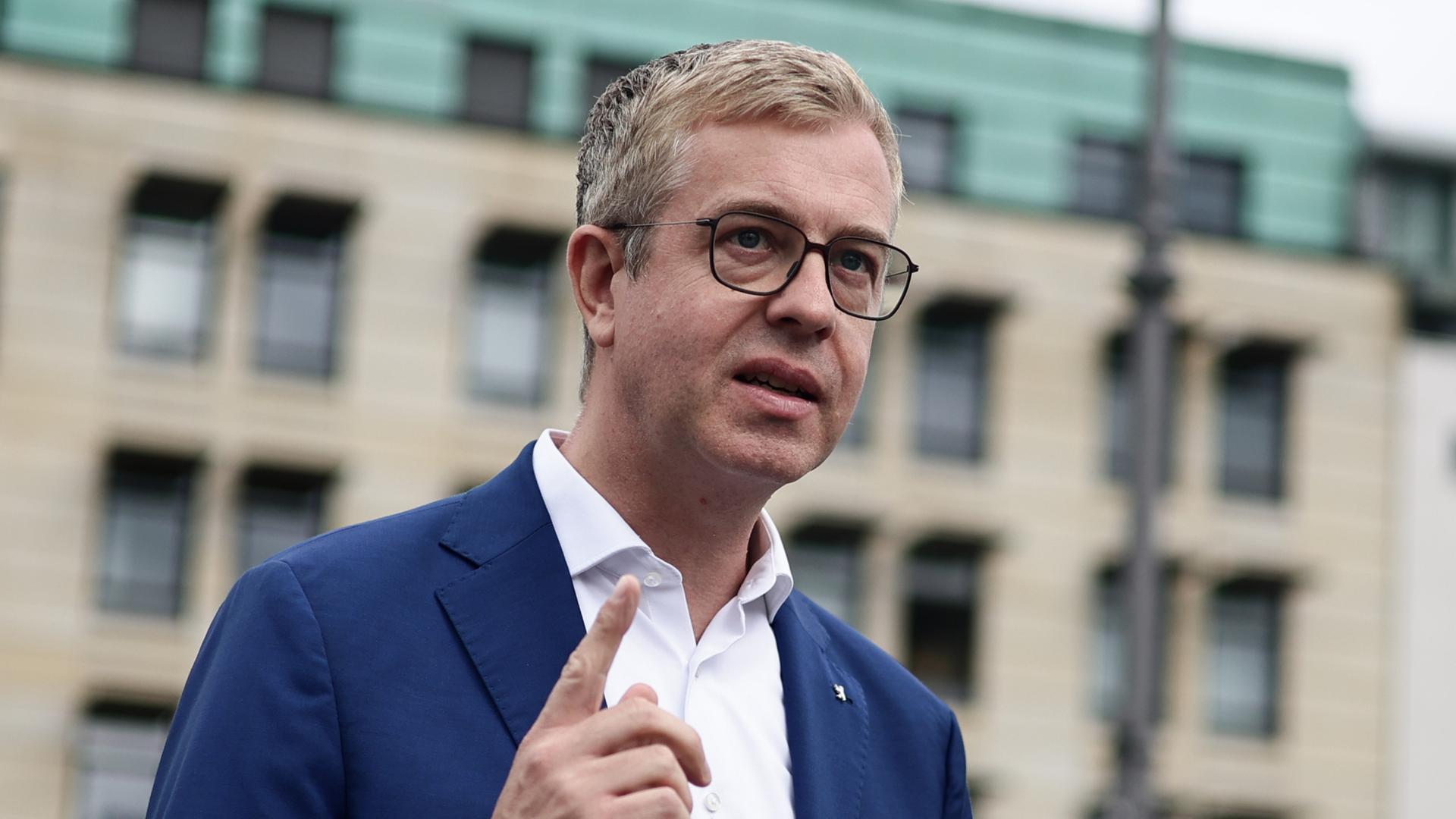
For years, Stefan Evers pulled the strings in the background. Now, for the first time, the previous finance senator is himself at the head of a CDU election campaign - the biggest test of his career.
For years, Stefan Evers pulled the strings in the background. Now, for the first time, the previous finance senator is himself at the head of a CDU election campaign - the biggest test of his career. Andre Kartschall Stefan Evers has stepped in. Again.
He knows that. He already had to help out at short notice at the end of April. The Berlin Senate had lost - by resigning - the then Senator for Culture. Governing Mayor Kai Wegner (CDU) asked his party friend and finance senator Evers.
And he agreed unceremoniously. A little later, he was needed again. In mid-July, it was clear that Wegner could not remain a top candidate for the CDU. Too obviously, the city hall chief had strained the truth when asked what exactly he had done professionally, when at the beginning of the year almost 50,000 households in Berlin were without electricity (the answer: apparently significantly less than Wegner had publicly claimed).
Suddenly top candidate And so Evers was to play the bouncer again in mid-July - this time as top candidate for the House of Representatives election. Of course, he said “yes” again. This puts it in the front row for the first time. Until now, he had mainly profiled himself as an expert in the background.
Born 1979 in Herdecke, North Rhine-Westphalia, grew up in Paderborn. After graduating from high school, he studied law in Potsdam. In addition, Evers worked as a speaker for CDU members of the Bundestag. He apparently does this properly and recommends himself for other tasks in the party.
In 2011, he moved into the Berlin House of Representatives. Until then, he had rarely been in the spotlight. In his district association Charlottenburg-Wilmersdorf and the local parliamentary group, others were always the chairmen. Evers was a second row man.
Only in the House of Representatives did his profile sharpen over the years. Evers became chairman of the parliamentary group, spokesman for urban development policy, and finally Secretary General of the CDU in Berlin in 2016. His state chairman at the time: Monika Grütters. She was considered a representative of Merkel's middle course within the party.
Continue reading at the source.