Germany
Women's Health: When Heart Attack is Overlooked
By Philipp Wundersee
Published September 22, 2026
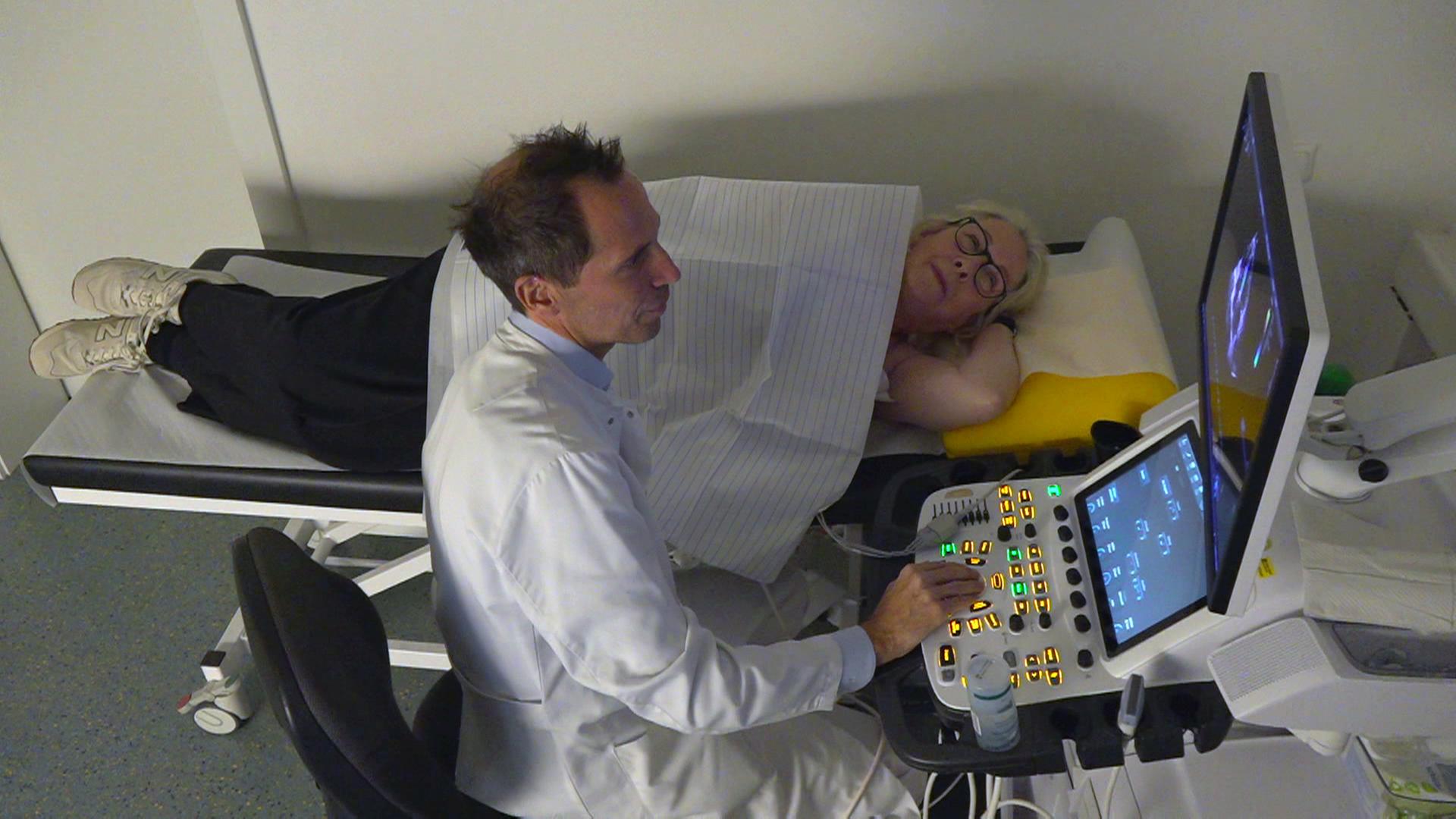
Certain diseases manifest themselves differently in women than in men. Nevertheless, gender-specific differences are often not sufficiently taken into account. A new alliance demands attention.
Certain diseases manifest themselves differently in women than in men. Nevertheless, gender-specific differences are often not sufficiently taken into account. A new alliance demands attention. Von Philipp Wundersee Simone von Polheim sits at her living room table in Remscheid and scrolls through holiday photos from Italy.
Pictures of the sun, of mountains, of excursions. They are memories of holidays that almost ended in death. “I thought I wouldn't survive this. I noticed my circulation sagging and I got back pain like I didn't know before,” she recalls.
In the middle of the holidays, she suffered a heart attack, but no one recognized him. At first, her complaints were not recognized as a heart problem in the hospital. “I couldn't stand this pain. You didn't measure blood pressure, you didn't do anything.
I was put in the hallway, ”she says. “I could have died then, ”the medical team at the hospital believed in a sore muscle, an episode of a canyoning tour. “I couldn't get up either. That seemed weird to me.
I then asked if we could write an ECG. But they said: that would not be necessary." Only back in Germany is the correct diagnosis made: heart attack. In a catheter treatment, their multiple stents are used. To this day, she is particularly burdened by a realization: "The bad thing is the thought afterwards that I could have died at that time.
That followed me for a very long time." Women often show other symptoms At the Women's Heart Center at the Rhein-Maas-Klinikum in Würselen near Aachen, Chief Physician Michael Becker deals with cases like this on a daily basis. Eight years ago, Germany's first specialised centre for women's cardiology was established there. “We still have a long way to go. We founded the first women's heart centre in Germany here with great resistance.
This resistance is slowly reducing, ”says Becker. Women with heart attacks often show different symptoms than men. Instead of the classic chest pain, many patients focus on nausea, upper abdominal discomfort, back or jaw pain, shortness of breath or severe exhaustion. This can lead to heart attacks being detected later or not at all.
“You have to know what to look for,” says Becker. "We need a rethink in society" He observes that both patients and medical staff still too often underestimate these warning signs. Christine Hesse is with him at the clinic for follow-up care. The 52-year-old was sent from doctor to doctor for years.
Her pain was dismissed on the grounds that she was too sensitive. "The cardiologist told me more and more intensely: I would be nervous and stressed," she says. “The symptoms didn't stop and kept getting worse. This story is also very painful in retrospect.
And today I also know that she was life-threatening." In the end, she was operated on by Michael Becker in Würselen. “Six months later, I would have had a heart attack. You should always insist on treatment and not be unsettled, "says Hesse. According to cardiologist Becker, women must take complaints seriously and seek medical help at an early stage.
At the same time, there is a need for more sensitivity in the health system to gender differences. "We need a rethink in society. We need support in politics. Something has to change in teaching.
The young colleagues have to learn early in their studies that women are to be treated differently than men, "says Becker. Alliance establishes Alliance for Women's Health Against this background, the Alliance for Women's Health was founded in Berlin. The cross-sectoral alliance aims to bring together scientific findings, medical professional societies, care institutions and other actors. The aim is to develop cornerstones for a national women's health strategy.
Gender-specific differences in research, prevention and care should be taken into account to a greater extent. "In Germany, there is already a lot of knowledge, strong initiatives and people who have been advancing women's health for years," says co-initiator Cornelia Wanke. "We want to join forces with Allianz. Women's health is not a niche issue, but a central question of sustainable and equitable health care." The alliance identifies concrete fields of action: women's health should be permanently anchored on the political agenda, gender-sensitive research should be strengthened and existing care gaps should be closed across all phases of life.
In addition, women's health literacy and self-efficacy should be promoted. Germany is still at the beginning of a development From the point of view of Chief Physician Becker, more knowledge is needed about gender-specific differences in medicine. This applies not only to cardiovascular diseases, but also to numerous other diseases and therapies. "Every organ is different in men and women.
We must see and perceive women as women and initiate appropriate diagnostics and therapies. Completely gender-specific,"says Becker. In the meantime, new research networks, courses and specialised centres are emerging nationwide. However, many experts see Germany as still at the beginning of a development in an international comparison.
For Simone von Polheim, this debate comes too late. Her heart attack is now behind her, she does sports, likes to walk her dog. But she has not forgotten the experience. “Luckily, I turned out well.
I have a case in my circle of acquaintances. A woman died. She was treated for gallstones even though it was a posterior wall infarction.“ She wishes there was more talk about women's health. Because the differences can sometimes cost lives.