Germany
Under one roof: How daycare children and seniors learn from each other
By R. Nordin Mencke
Published September 30, 2026
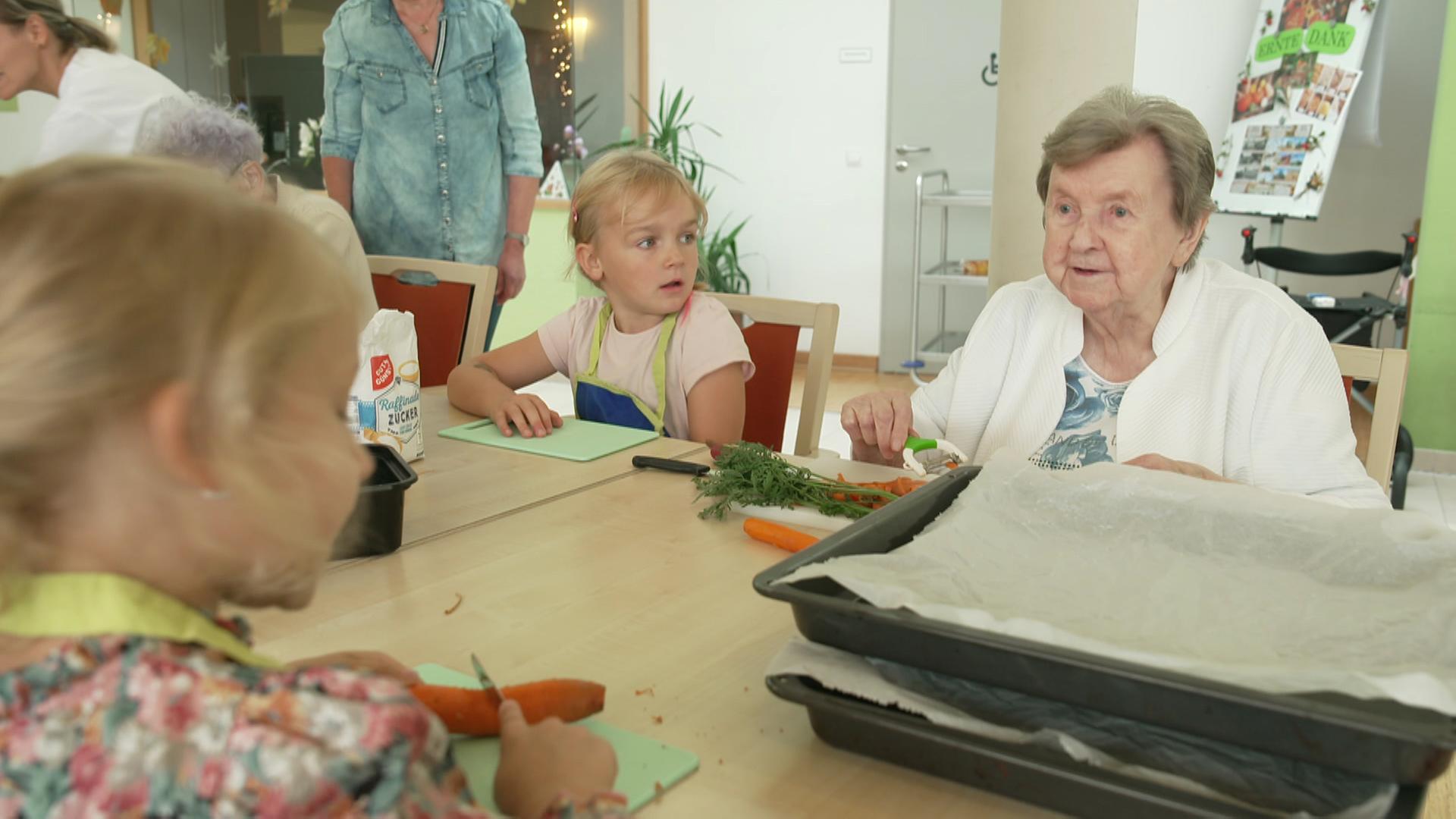
They sing and play together - and give each other joie de vivre: in the Harz Mountains, daycare centre children and nursing home residents live under one roof. Experts also see the model as a glimmer of hope in the fight against dementia.
They sing and play together - and give each other joie de vivre: in the Harz Mountains, daycare centre children and nursing home residents live under one roof. Experts also see the model as a glimmer of hope in the fight against dementia. By Rebecca Nordin Mencke, MDR Football takes place while sitting in the multi-generational house in Blankenburg. The 92-year-old Werner Bannasch and other residents of the nursing home in the Harz have already taken a seat opposite each other in the garden in two rows when the children of the integrated daycare centre storm out into the open.
“Seat football,” a child shouts. There is a short scramble for the last free space - but everyone is welcome here. “The most beautiful thing is the games we make,” says Bannasch. “There's always something going on." His own children, grandchildren and great-grandchildren live outside of Blankenburg.
But in the multi-generational house, he and the other residents come into contact with the daycare children on a daily basis. When it comes to meals, they have a choice between the meeting place and quieter, more secluded spaces. And at least once a week there are joint activities: soccer, baking, walks and even a Kneipp pool in the garden. "Moments of surprise" when singing together The idea for daycare and care under one roof was initially born out of necessity.
Because there were not enough children for the nursery with 100 places, a care facility of the institution no longer met the requirements. The merger has proven its worth - for almost 20 years now, says facility manager Doreen Irrgang: "Getting older healthily has a lot to do with social contacts." The regular encounters with the children activated the nursing home residents, she observes. Even if a dementia process is already in motion, many memories would be awakened. "Especially when we sing songs with the children, they agree," says Irrgang.
"It's always such a surprise moment, it's very heartwarming." Emotions can influence dementia How contact with children in particular affects aging has hardly been studied so far. But not only lifestyle factors such as smoking, high blood pressure and diabetes have a decisive influence on the risk of dementia. "Social contacts in and of themselves are generally protective," emphasizes dementia researcher Francisca Rodriguez. At the German Center for Neurodegenerative Diseases (DZNE), she heads the research group for psychosocial epidemiology and public health.
According to estimates by the DZNE, the number of people suffering from dementia is expected to rise to 2.7 million by 2050, compared to 1.8 million in 2023. The disease is thus more common than the most common individual tumour types. So are multi-generational projects the answer to integrating older people and those in need of care more socially and ultimately postponing the onset of dementia?
Rodriguez sees at least indications that dealing with children can have a beneficial effect here. Especially with regard to the role of emotions, research has repeatedly shown exciting results. In dancing, making music, and creative activities, for example, effects can be observed "that could have an important influence on well-being, the course of dementia, and neuropsychiatric symptoms," explains the scientist. But we still don't really understand what that is.
Sustainable financing for projects helpful Whether nursing home and nursery under one roof or other opportunities for neighbourly encounters: Sustainable financing for such projects makes sense in any case, says Rodriguez. "If you can actively maintain participation through such projects and can also reduce neuropsychiatric symptoms and, if necessary, maintain individual performance for longer, then the medical costs in general will also fall again." Because the costs associated with dementia are enormous: according to the DZNE, the direct medical costs alone amounted to about 38 billion euros in 2023. Informal - i.e. unpaid - care by relatives therefore accounted for a further 45 billion euros. Combination of nursery and care so far rarely in Germany there are so far only a few facilities such as the multi-generational house in Blankenburg.
In Weißenfels, for example, the German Red Cross operates a multi-generational campus, in Halle an old people's nursing home of the Paul Riebeck Foundation and a Montessori primary school are cooperating closely with each other, in Cunewalde, Saxony, a new building is currently being built that will connect nursery and day care from next year. The head of the multi-generational house in Blankenburg emphasises that it is by no means only the elderly who benefit from the coexistence. In this way, the children learned a natural way of dealing with old age and the need for care - with grief and death, but also with the beautiful sides of aging: for example, when residents of the nursing home make new friends or even a new partnership. Interfaces require more personnel After almost 20 years, the personnel of the different departments has also grown well together, explains Irrgang.
The fact that the daycare centre and nursing home share the same carrier makes things easier in the organisation than if two carriers had to join forces. Nevertheless, she would like the interfaces to be considered for houses like her, in addition to the care key and the educator's key. More staff are needed for this. In any case, the waiting list for the multi-generational house in Blankenburg is long.
Ingrid Schrader also first came to another nursing home before finding a place here. The former infant nurse sees only advantages. Of course, the children are also sometimes loud - "but if it means' being quiet ', then they do that too. They're very nice." The 89-year-old and the four-year-old Meena next to her smile briefly.