Germany
Lots of criticism and a little praise for the fuel price relief package
Published September 19, 2026
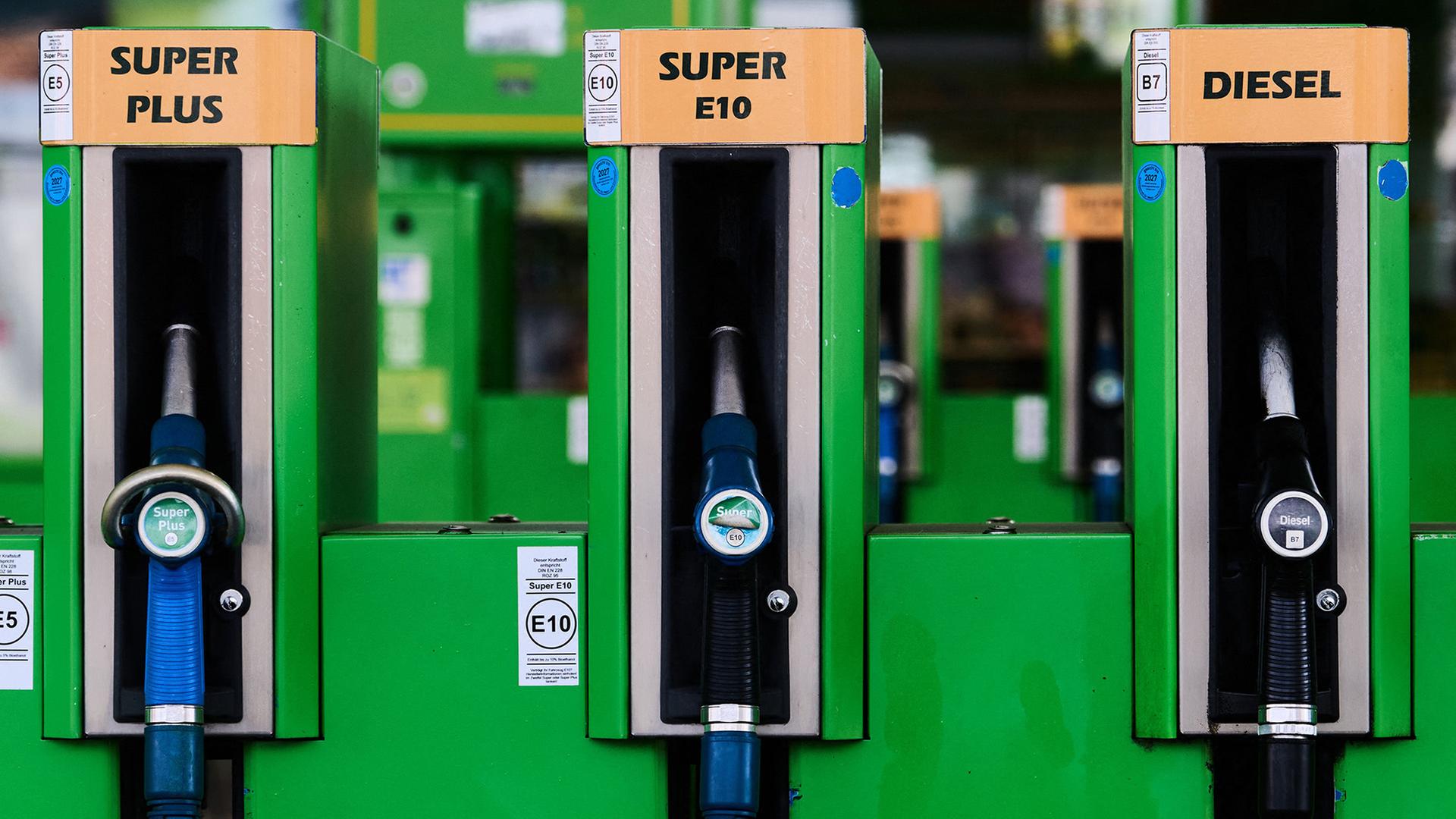
The federal government wants to take action against high fuel prices with a tank discount and fuel price cap. For the most part, the measures meet with criticism - they are not sufficiently targeted. But there is also agreement.
The federal government wants to take action against high fuel prices with a tank discount and fuel price cap. For the most part, the measures meet with criticism - they are not sufficiently targeted. But there is also agreement. The German government wants to counteract the price shock at the petrol stations with several measures - and is defending its billion-dollar plans as support for everyone.
"We are acting because citizens and companies now need concrete relief," said Economics Minister Katherina Reiche. The agreed reductions of 17 cents per litre of fuel and the planned price cap would benefit families as well as crafts, SMEs and industry, according to the CDU politician. Praise comes from Mecklenburg-Vorpommern's Prime Minister Manuela Schwesig. She had been committed to this for a long time, said the SPD politician, who faces a state election on Sunday.
High fuel prices were one of the central issues in the election campaign. "The high fuel prices are a massive burden for citizens and the economy. That is why it is right for the federal government to act." The relief announcement was also positively received by the German Farmers' Association and the logistics industry. "We welcome this proposal to reduce the energy tax on fuels in the short term," building president Joachim Rukwied told Bild.
At the same time, he called for further steps. The aim must be to bring diesel prices in Germany permanently closer to the level of many European neighbouring countries. "17 cents per litre can cushion the acute burden," said Dirk Engelhardt, head of the Federal Association of Road Freight Transport Logistics and Disposal. It is now crucial that the announced price cap actually comes and takes effect in times of exceptionally high crude oil prices, he told Bild.
"Kneeling before powerful oil companies" On the other hand, the measures met with some fierce criticism from the opposition, consumer protectionists and social associations. Probably the clearest words were from Green Group deputy Andreas Audretsch: "The tank discount is back. What madness," he told the newspapers of the editorial network Germany. The money must reach the people and not the oil companies.
The fact that the government waives an excess profit tax is "a kneel before the powerful oil companies". Instead, Audretsch demanded the payment of an energy money. Greenpeace expert Marissa Reiserer also criticised the tank discount: "A big chunk of it ends up as an excess profit in the pockets of the oil companies". All this has been confirmed by the Federal Government from various sides.
Nevertheless, she again opted for "this unsuitable discount". Instead of wasting tax billions with the watering can, the real problem must be addressed: dependence on oil. The Bund für Umwelt und Naturschutz Deutschland (BUND) called the tank discount "expensive, unsocial and unenvironmental". "A mobility or climate money, with a per capita payment, would have been the better solution," explained Bund transport policy expert Jens Hilgenberg.
A renewed and flat-rate tank discount would again provide greater relief to high-income households with high fuel consumption. Left Party boss Ines Schwerdtner told the Funke media that a price cap and lower taxes could help in the short term. “But a plaster doesn't heal a wound yet,” she said. More speed is needed in the transition to renewable energies to end dependence on international crises.
As long as Germany remains dependent on international crises and conflicts for oil and gas, the next price shock is only a matter of time. ifo President considers tank rebate to be a "mistake" Ramona Pop, Member of the Board of the German Consumer Association (vzbv), also criticised the planned measures as insufficiently targeted. The projects are "expensive, short-sighted and not very precise," Pop told the Rheinische Post. "Instead, we now need relief measures that mainly reach low- and middle-income households and at the same time take into account the beginning of the heating season," demanded Germany's top consumer protector.
Tomaso Duso, chairman of the Monopolies Commission, told Bild that the first tank discount in May and June of the relief volume of 1.6 billion euros left a good 200 million euros with the oil companies. He rejects a price cap. That would be “a bureaucratic monster." Under certain circumstances, prices could even rise as a result, and investigations in Belgium and Greece have shown corresponding effects. In addition, there was a risk of market distortions and supply problems.
The Social Association of Germany (SoVD) also expressed dissatisfaction. The CEO Michaela Engelmeier welcomed the planned fuel price cap, but criticized the tank discount as a watering can solution. This also relieves those who do not need support. “That's disagreeable,” she told Spark Media.
The president of the ifo Institute, Clemens Fuest, argues similarly. “I think the tank discount is a mistake,” he told the picture. The state spends a lot of money on the measure and thus reaches "to a large extent motorists who can afford the gasoline prices". From his point of view, it would have been better to relieve the burden more accurately.
Fuest proposes instead to increase the kilometre allowance for long-distance commuters and to support people with low and middle incomes directly.