Germany
What the Union and SPD are wrestling over in the care reform
By I. Karras
Published September 28, 2026
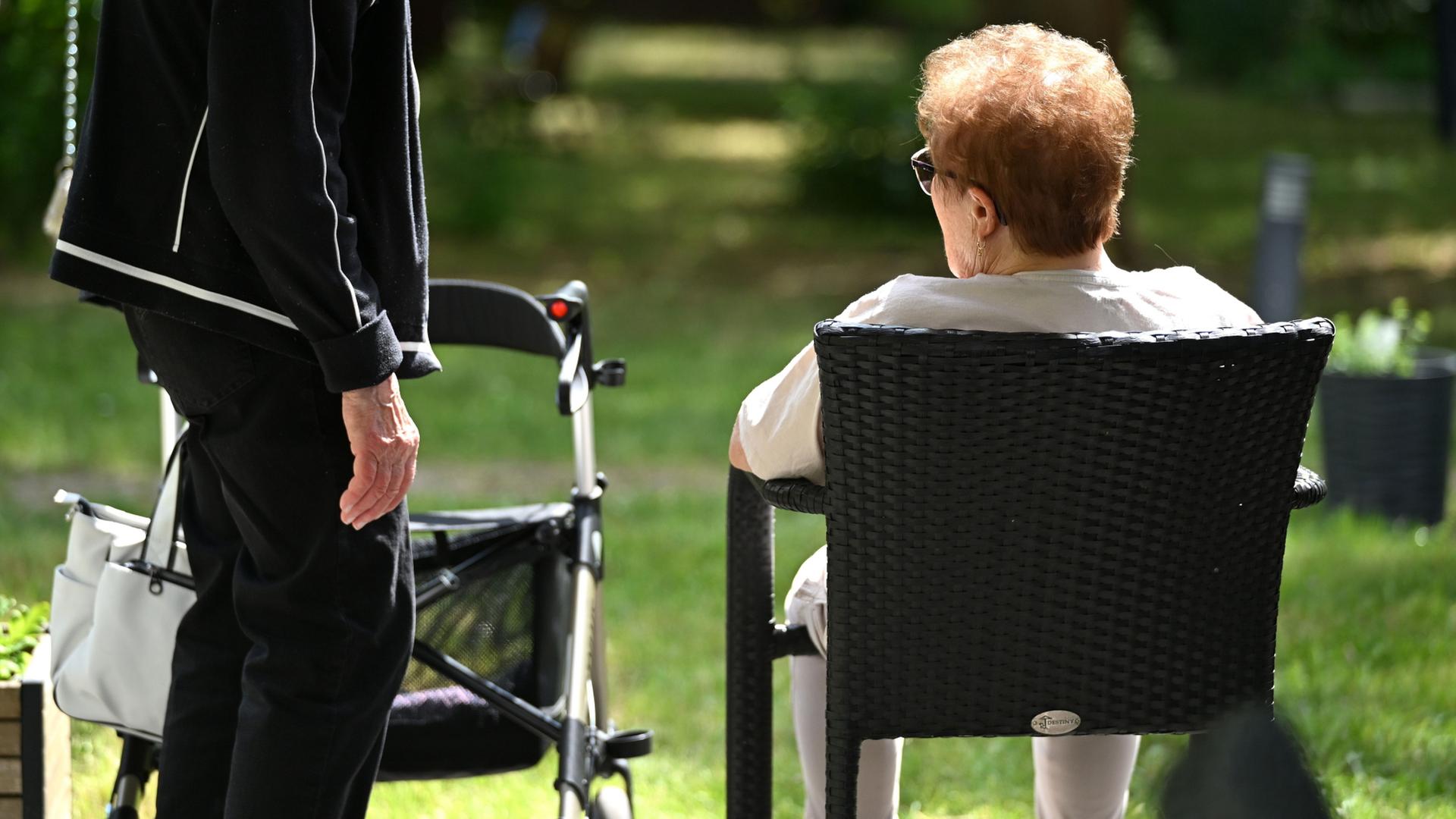
The care reform has a financing problem, and the Union and the SPD agree on this. But when it comes to the question of solutions, the coalition partners are far apart. Will the breakthrough be achieved by the Cabinet meeting on Wednesday?
The care reform has a financing problem, and the Union and the SPD agree on this. But when it comes to the question of solutions, the coalition partners are far apart. Will the breakthrough be achieved by the Cabinet meeting on Wednesday? By Isabell Karras The basic problem of long-term care insurance is quickly explained: there are more and more people in Germany who are dependent on long-term care, but in proportion to this there are fewer and fewer who pay contributions.
In 1998, there were 29 people per person in need of care - last year only ten. At the same time, care becomes more expensive. The costs have risen sharply: from 16.9 billion euros in 2005 to 70.4 billion euros last year. The federal government expects that long-term care insurance could be missing 7.5 billion euros as early as next year.
Linnemann is focusing on savings Federal Health Minister Carsten Linnemann (CDU) wants to close this gap first and foremost through savings. In many respects, his design is based on the plans of his predecessor Nina Warken (CDU). Among other things, these provide for a closer examination of who receives a nursing degree and is therefore entitled to benefits from long-term care insurance. The hurdles to recognition of nursing degrees would therefore be higher.
In addition, it is about the costs in the nursing home: people in need of care pay part of it themselves. The long-term care insurance also covers a fixed amount. The following applies: the longer someone lives in the home, the larger this subsidy will be. Linnemann wants to slow down this help in time.
Anyone who accommodates relatives in the home would then have to pay the full share out of their own pocket for longer. In the report from Berlin, the minister describes the draft as "a first aid" to keep contributions stable. In a second step, he wants to set up a commission at the end of October that will make long-term care insurance "structurally fit for the 2030s". The SPD wants a "care cost cap" The SPD fears that the costs of the reform will end up mainly with those in need of care and their families.
"We are not participating in a purely cutback package," says Matthias Miersch, the group chairman. The necessary structural reforms were lacking. The SPD's proposal: a nursing-cost cap. In a first step, the share that those in need of care pay for pure care and care themselves, the so-called institutional own share, is to be limited to 1,500 euros per month.
In a further step, the state subsidies are to be credited against this capped amount. This would mean that the costs for the own share would fall below 1,500 euros. However, a place at home would still cost significantly more overall, because the costs for accommodation and food as well as the maintenance of the home would continue to be added. According to the Association of Replacement Funds (VdEK), the share that people in need of care have to pay out of their own pockets is currently 3,364 euros, the national average.
Linnemann says that this would not even solve the problem "in the beginning". The SPD wants to finance its proposal, for example, by raising the contribution assessment ceiling or by increasing the participation of private insured persons. Linnemann, on the other hand, expects "the highest constitutional doubts" in such a financial balance between private and social long-term care insurance. What's next?
Government spokesman Steffen Meyer says: "In these hours and days, we are not discussing the whether of reforms or the whether of a care reform, but we are talking about the how." There would be conversations "in very different constellations". The responsible state secretaries are currently struggling to reach an agreement, followed by a top round in the evening by Federal Chancellor Friedrich Merz and Federal Finance Minister Lars Klingbeil. If the Union and the SPD do not reach a compromise, the care reform could be removed from the agenda in the cabinet on Wednesday. It would not have failed definitively, but it would be a setback for the black-red coalition.