Germany
Tens of thousands protest against social reforms in several cities
Published September 26, 2026
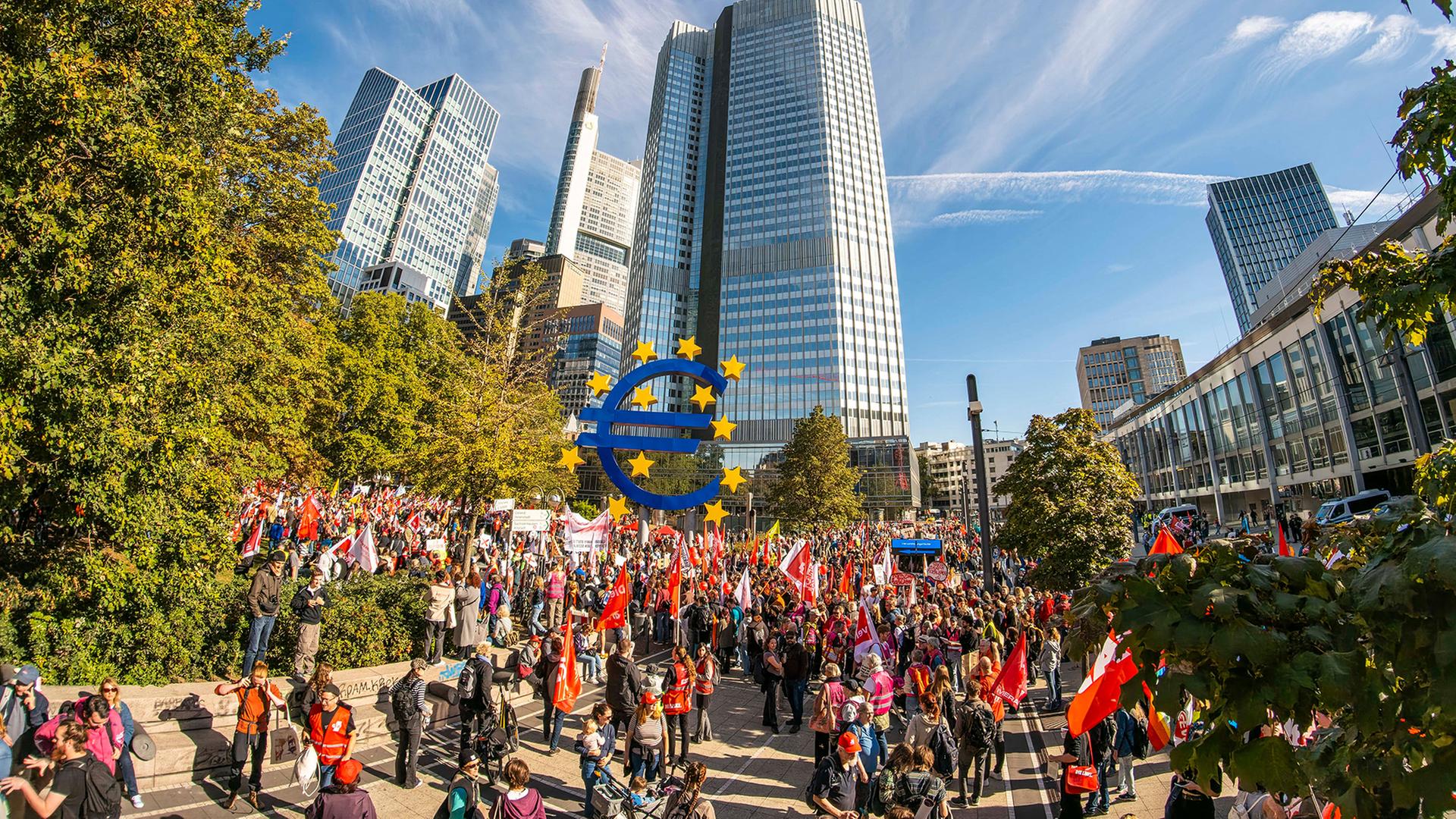
Tens of thousands of people have protested against the social policy of the federal government. The German Trade Union Confederation had called for this. The government plans were at the expense of the employees, according to DGB boss Fahimi.
Tens of thousands of people have protested against the social policy of the federal government. The German Trade Union Confederation had called for this. The government plans were at the expense of the employees, according to DGB boss Fahimi. There have been demonstrations and rallies in several cities on the nationwide Day of Action for the Welfare State and Democracy.
The German Trade Union Confederation (DGB) organised the events. In 15 major cities, people went under the motto "Hard earned! Your work. Your health.
Your pension."- including in Hanover and Bremen. The DGB speaks of a total of about 175,000 participants. With the action day, the DGB and its member unions wanted to send a clear signal against "social cuts and a policy that cuts benefits, curtails labour rights and increasingly passes social risks on to employees, pensioners and their families ". Together, the unions demonstrated for a strong welfare state, secure jobs, good working conditions and the protection of workers' rights.
About 13,000 people in Hanover According to the police, about 13,000 people gathered in the city centre for the rally in Hanover, before which there had already been a demonstration. Millions of people in this country relied on their protective rights in the world of work, security in old age, good health care and affordable care. These are not charities, but won rights, emphasized Ernesto Harder, Chairman of the DGB Lower Saxony. In Bremen, according to the police, about 7,000 people moved through the city centre.
If life becomes more and more expensive, public infrastructure decays and worries about social decline grow, frustration and disappointment would arise, explained Christian Wechselbaum, regional managing director of the DGB Bremen-Elbe-Weser. A weakened welfare state would thus directly weaken democracy, and Germany therefore needs a policy change towards more social security and justice. DGB boss Fahimi in Essen "A strong economy does not come about by reducing social security and further increasing the burden on employees," Fahimi criticized at the rally in Essen. "It is created by investments, by innovations, by good work and by good wages that secure purchasing power." We need modern infrastructure, reliable framework conditions and protection in the face of international competition.
“We are ready for change,” stressed the union leader. "But not by sharpening our rights, cutting our social security and devaluing our life's work." Ver.di CEO Frank Werneke was satisfied with the participation at the beginning of the rally in Frankfurt am Main. "It's very, very impressive in Frankfurt," he said in the Tagesschau. It is an incomprehensible number of people.
He described the planned reforms as lies and deception. They are nothing more than a clear-cut against the welfare state and workers' rights. Lower Saxony's Prime Minister Olaf Lies (SPD) is calling for corrections to the Federal Government's reform package. This must be socially cushioned.
"The vast majority of the reform package remains in place. But you must not implement reforms with your head through the wall for which there is no acceptance," Lies told the "Handelsblatt". For example, Lies spoke out against the abolition of the deduction-free pension after 45 years of contributions. "Anyone who currently has 45 contribution years should be able to retire earlier than someone without these years," said the SPD politician.
"It annoys me when I get the impression that it doesn't matter how long someone has paid in. This is indecent towards people who go to work despite having less money." The pension reform is being rejected by several state governments. Among other things, Mecklenburg-Western Pomerania's Prime Minister Manuela Schwesig (SPD) had criticised the plans as unjust. Schweitzer: Reforms must be fair The deputy chairman of the SPD, Alexander Schweitzer, is also calling for changes to Chancellor Friedrich Merz's (CDU) reform course.
"For Friedrich Merz, reforms mean that growth can only come from cuts in the welfare state," Schweitzer told the "Frankfurter Allgemeine Sonntagszeitung". However, reforms must be fair, and everyone must make their contribution. “Instead, the Chancellor breathes the cold neoliberal spirit of the 1990s." The rallies of the DGB under the motto: "Hard earned! Your work.
Your health. Your pension"takes place in 15 major cities, including Bremen, Hamburg, Leipzig, Magdeburg, Nuremberg and Stuttgart. Thousands of participants are expected. The Left Party is participating in the campaign and, according to its own statements, wants to support it"with its own blocks, feeder demonstrations and speeches".
BDA accuses DGB of "ritual refusal to reform" before Germany's employers exercise sharp criticism on the day of action of the DGB. "The trade unions say no to almost every change," said the managing director of the Federal Association of German Employers' Associations (BDA), Steffen Kampeter, to the German Press Agency. “You're dreaming of yesterday's world." Kampeter accused the DGB of "ritual refusal to reform". Everyone wanted safe pensions, good care and efficient health care, Kampeter said.
"But demographics, skills shortages and international competition cannot be demonstrated away."