Saxony-Anhalt
Tank discount from 1 October: Will fuel price caps and excess profit tax bring more in the long term?
By MDR SACHSEN-ANHALT
Published September 30, 2026
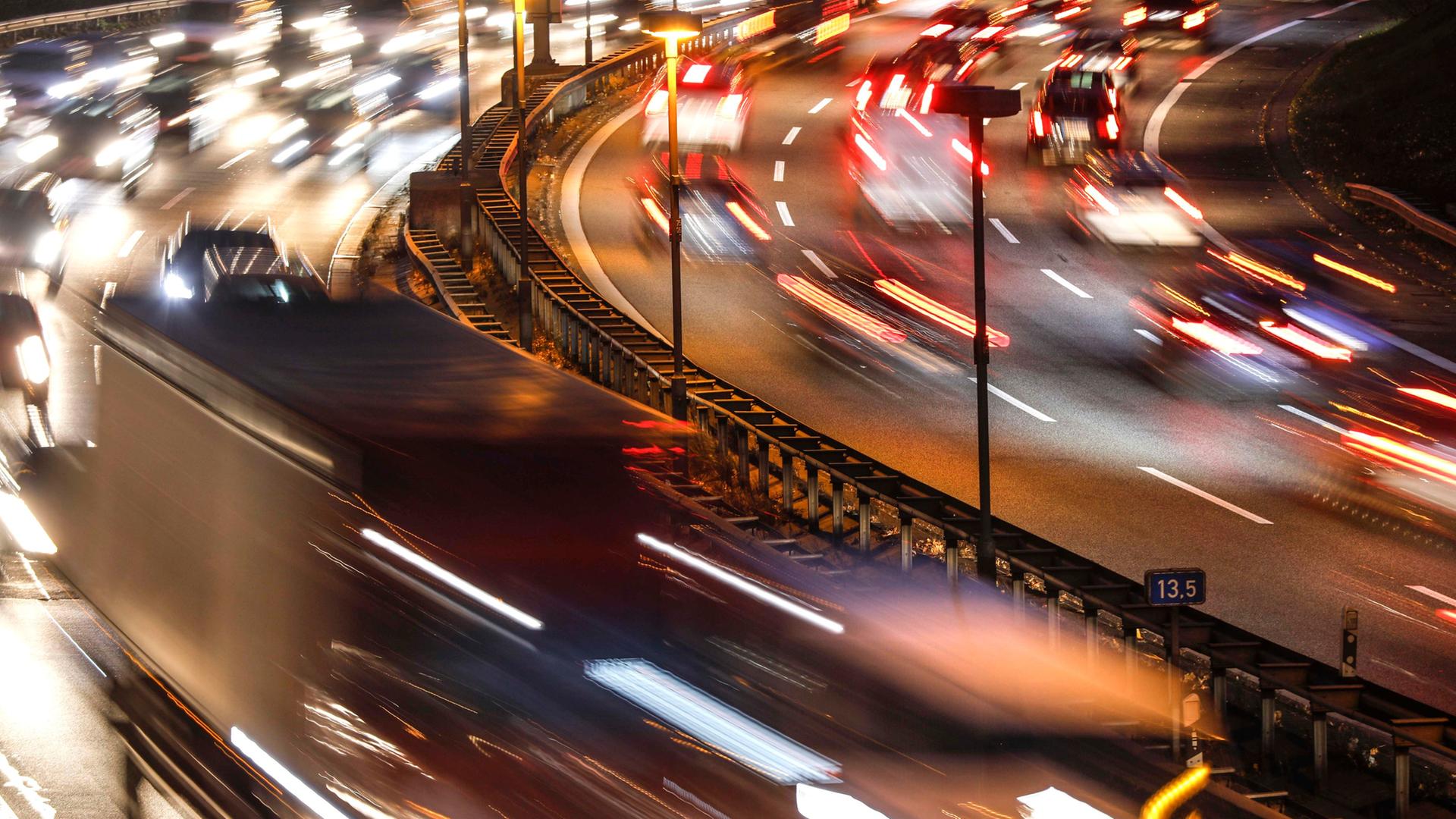
The new tank discount will apply from 1 October. The guests discussed what it does at petrol stations and what long-term solutions there are in addition to the fuel price cap at "Fakt ist".
The new tank discount will come into effect on 1 October. The guests discussed what 17 cents less does to the pump at "Fakt ist!" on Wednesday evening in Magdeburg. It was agreed that it is only a short-term solution, but now long-term relief is needed.
However, guests from politics, business and science rated differently what fuel price caps or excess profit tax can bring. From MDR SAXONY-ANHALT "Of course it hurts because the prices are currently very high" – so comments a guest at the beginning of the "Fact is!"broadcast in Magdeburg on Wednesday. There is approval from the audience, and there is also agreement on the podium: the fuel prices are too high and burden people. New tank discount from 1st
The new tank discount is to help from 1 October. By the end of the year, the federal government will reduce the energy tax on diesel and petrol by 14 cents per litre. Because VAT is also reduced in this way, the litre of fuel will be just under 17 cents cheaper – provided that the companies pass on the tax reduction to consumers in full.
The exact savings from the tank discount depends on how and how much you drive – and whether the tank discount is passed on in full. For example, if you drive a diesel vehicle for 15,000 kilometres a year with a fuel consumption of seven litres per 100 kilometres, you will need 262.5 litres of diesel in three months. A tank discount of 16.7 cents saves almost 44 euros here. For a petrol engine with eight litres of fuel consumption per 100 kilometres and 9,000 kilometres per year, the saving is 30 euros.
In the audience, there is sometimes skepticism about this, in addition to the widespread opinion that 17 cents are too little. The managing director of the Fuels and Energy Trade Association (en2x), Christian Küchen, opposes this. He denies that oil companies would now "pop the champagne corks", as one user commented on MDR SAXONY-ANHALT's Instagram channel: "This will not change the situation of the oil companies' profits, the German energy tax cut." Social media post on Instagram The reason for the increased profits worldwide are shortages, both as a result of the Iran war and the Russian attack on Ukraine. The association had already objected to the evaluations after the first tank discount, according to which the discount was largely, but not completely, passed on to consumers.
CDU politician Rohwer: Targeted direct payments not yet possible The CDU politician Lars Rohwer voted "Yes" in the Bundestag for the tank discount. He is satisfied with the decision, but not yet with the long-term strategy. That is why there should be more perspectives from 2027. This includes the planned fuel price cap, but also direct payments, which are intended to relieve frequent travelers and people with low incomes.
The fact that these payments do not yet exist is also due to the fact that fewer than one in five citizens in Germany have also deposited the account number with the tax ID. The fuel price cap is intended to set a maximum price for petrol and diesel. It is based, among other things, on the development of oil prices as well as the costs and profit margins of traders. According to the Federal Government, a dynamic model modelled on Belgium and Luxembourg is planned.
This means that a maximum price is set by the state every day, which petrol stations may not exceed. Helmut Bohnefeld also believes that the tank discount is not enough in the long term: "17 cents can only be the beginning." The entrepreneur from the Saale district has high expenses for his vehicles – and hopes for a policy that enables companies to operate well. Green politician Lemke: Current plans have already been discussed by traffic light The Green MP and former environment minister Steffi Lemke criticises the fact that the traffic light coalition had already discussed plans such as direct payments in 2022. Since then, too little has been done to actually implement them.
Lemke sees a so-called excess profit tax as a long-term solution. These would have to pay companies that make unusually high profits due to a certain situation – for example, if prices for scarce goods rise. Neither politicians nor taxpayers could compensate for the current high prices in the long term, says Lemke. Business economist: No excess profits instead of excess profit tax From the point of view of Sebastian Eichfelder, Professor of Business Taxation at the University of Magdeburg, an excess profit tax, as was already the case at the European level in 2022/2023, would be well regulated if it only affects one industry or a specific price.
The better solution, however, is not to let excess profits arise in the first place. "So, first we pay more at the pump and later a tax is levied on it again" – that is complicated. Business association managing director Christian Küchen is critical of the excess profit tax. According to him, taxation in 2022/2023 has affected companies differently, up to and including distortions of competition.
In addition, investments were cancelled. The suggestions for dealing with the high fuel prices are manifold. In the audience, one guest who is driving to Leipzig to refuel, another who has been driving a gas-powered car for years. Ultimately, however, what is certain for everyone is that political solutions are needed.
MDR (Maren Wilczek, Lonny Kirchner, Susanne Ahrens), dpa